
Alicante works well for remote work for an unromantic reason: it is a mid-sized city with its own international airport. That means direct flights to much of Europe without connections, distances you can walk, and a cost of living that has not yet caught up with Barcelona or Lisbon. The weather is why people come. The logistics are why they stay.
This guide is about the practical side: what to expect from the internet, where to base yourself depending on how you work, when to come, and what to check in an apartment before you commit to several weeks. If what you want is simply somewhere to sit and work tomorrow, we keep a separate list of the best cafes and coworking spaces to work remotely in Alicante.
Is Alicante a good base for remote work?
It depends what you need, so it is worth separating what Alicante does well from what it does not.
What it does well. Air connectivity first: the airport sits roughly 10-15 minutes from the centre and runs direct flights to a good number of European cities all year round, not only in summer. That turns a trip home or an in-person meeting into a half-day errand rather than a two-stop ordeal.
The scale of the city is the second point. Alicante is walkable: the centre to Postiguet beach takes minutes, and the Central Market, the Santa Cruz quarter and most speciality coffee shops sit within the same radius. You do not need a car to live here, which removes an entire spending category.
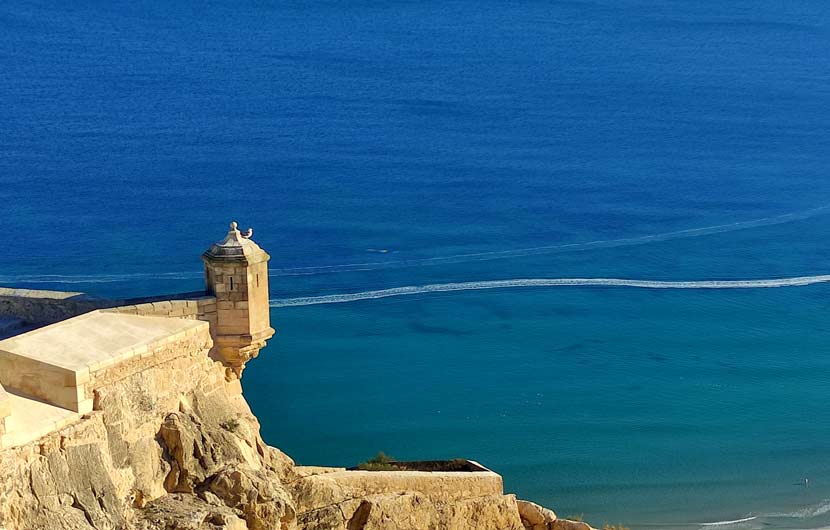
And the climate, obviously — but with a caveat almost nobody mentions: the real value is not the summer, when it is hot and the city fills up. It is that the winters are mild. Working in January in fifteen degrees and sunshine changes things considerably if you are coming from northern Europe.
What it does less well. The tech ecosystem is small compared with Barcelona, Madrid or Valencia. There is a nomad and freelance community, and there are coworking spaces, but if your priority is dense networking with startups or industry events every week, Alicante will feel thin. It is a city for working well and living well, not for building a local business network.
The other thing to weigh is seasonality. July and August change the character of the place: more noise, higher prices, more people everywhere. The good months for working from here are different ones, and we cover them below.
How good is the internet in Alicante?
Good — and this is probably the question that stops people from booking.
Spain has one of the widest fibre-optic rollouts in Europe, and Alicante is no exception: fibre reaches practically any home in the centre and the established neighbourhoods. 5G coverage across the city is solid too, which matters more than it sounds, because it gives you a real fallback: with a decent data plan and your phone tethering, you can work from almost anywhere if the wifi fails.
That said, three things worth verifying before booking a long stay:
Upload speed, not download. This is the classic mistake. A listing says “high-speed wifi” and means download, which is rarely the problem. What breaks a video call is upload. Ask for a screenshot of an actual speed test from the property, and look at the upload number.
Where the router is. In a larger flat with thick walls — very common in older buildings in the centre — the signal can drop noticeably in the far room. Ask whether there is a repeater, or whether the work area is near the router.
Whether there is a wired connection. For anyone doing heavy calls or uploading large files, an ethernet cable solves in one step what wifi does not. Not every property offers it, but it is worth asking.
Which neighbourhood suits how you work?
Alicante is not large, but the differences between areas are real and affect daily life more than square metres do.
Centre and Central Market. The default choice and the one that works best for stays of several weeks. Everything on foot, the highest density of cafes with power sockets and decent wifi, and life at any hour. The trade-off is noise: if you land on a street full of bars, Thursday to Saturday nights will make themselves known. Always ask which way the work room faces — interior courtyard or street — before booking.
San Juan beach. Seven kilometres of sand and a much quieter, residential feel. It connects to the centre by tram, which works well, but it is around twenty minutes. A good fit if you work focused at home and want to break the day with a swim; a worse fit if you plan to head into the centre daily.
Santa Cruz and the old town. Genuinely beautiful, whitewashed houses climbing towards the castle. The warning is physical: it is slopes and stairs, and carrying anything uphill in summer is no fun. For short stays, perfect.
Inland Costa Blanca. This is the option most people never consider: staying outside the city. Areas such as La Nucía, around forty minutes away by road, offer considerably more space for the same money, real quiet and mountains around you, with Benidorm and the coast minutes away. It works very well for long stays if you work heads-down and do not need the city every day. It works badly without a car.
When is the best time of year to come?
If you can choose your dates, this decision matters more than the neighbourhood.
April to June: the best window. Low-to-mid twenties, sea warm enough to swim from May, the city not yet saturated and accommodation at sensible prices. The ideal season for a stay of a month or more.
September and October: almost as good. The sea stays warm from the whole summer, prices drop from the second half of September, and the city returns to its normal rhythm. Many repeat nomads end up choosing these two months.
November to March: the secret. This is when Alicante becomes a genuine alternative to northern Europe. Sunny days at fifteen to eighteen degrees, a quiet city, low-season accommodation prices and cafes where you can actually get a table. It is cool at night and it rains some days, but it is probably the best value of the year for remote work.
July and August: the months to avoid if you can. Real heat, high prices, packed beaches and a city running in tourist mode. You can work perfectly well, but you will pay more for a worse experience. If you do come in summer, air conditioning stops being a nice-to-have and becomes non-negotiable.
One note on the Hogueras de San Juan at the end of June: it is the city’s biggest festival and it is spectacular, but it means a week of continuous noise, firecrackers during the day and very lively nights. If you are coming to work during those dates, factor it into your choice of accommodation.
What to check in a place before booking a long stay
This is where a holiday rental and a work stay part ways, and where most people get it wrong. A standard tourist apartment is designed for sleeping. One that works for remote work has to be designed for spending eight hours inside it.
What actually matters:
A real desk and a real chair. It sounds obvious and it is the most common failure. Plenty of apartments have a low dining table and decorative chairs nobody can sit in for a full day. Ask for a photo of the exact spot where you would work.
Natural light in the work area. And if you take video calls, light in front of you or to the side — not a window behind you turning you into a silhouette.
A full kitchen. This is the single biggest money-saver on a long stay and the most underestimated. Eating out twice a day for a month costs considerably more than the price difference between a place with a kitchen and one without. Decent fridge, hob, oven or microwave, and enough kitchenware.
Enough space. Living and working in the same room for weeks wears you down. The difference between twenty square metres and thirty-five is not luxury: it is being able to close the laptop and be somewhere else without leaving the flat.
A washing machine. Non-negotiable past two weeks.
Air conditioning and heating. Both. Heating gets forgotten because “it’s Alicante”, and on a January night you will want it.
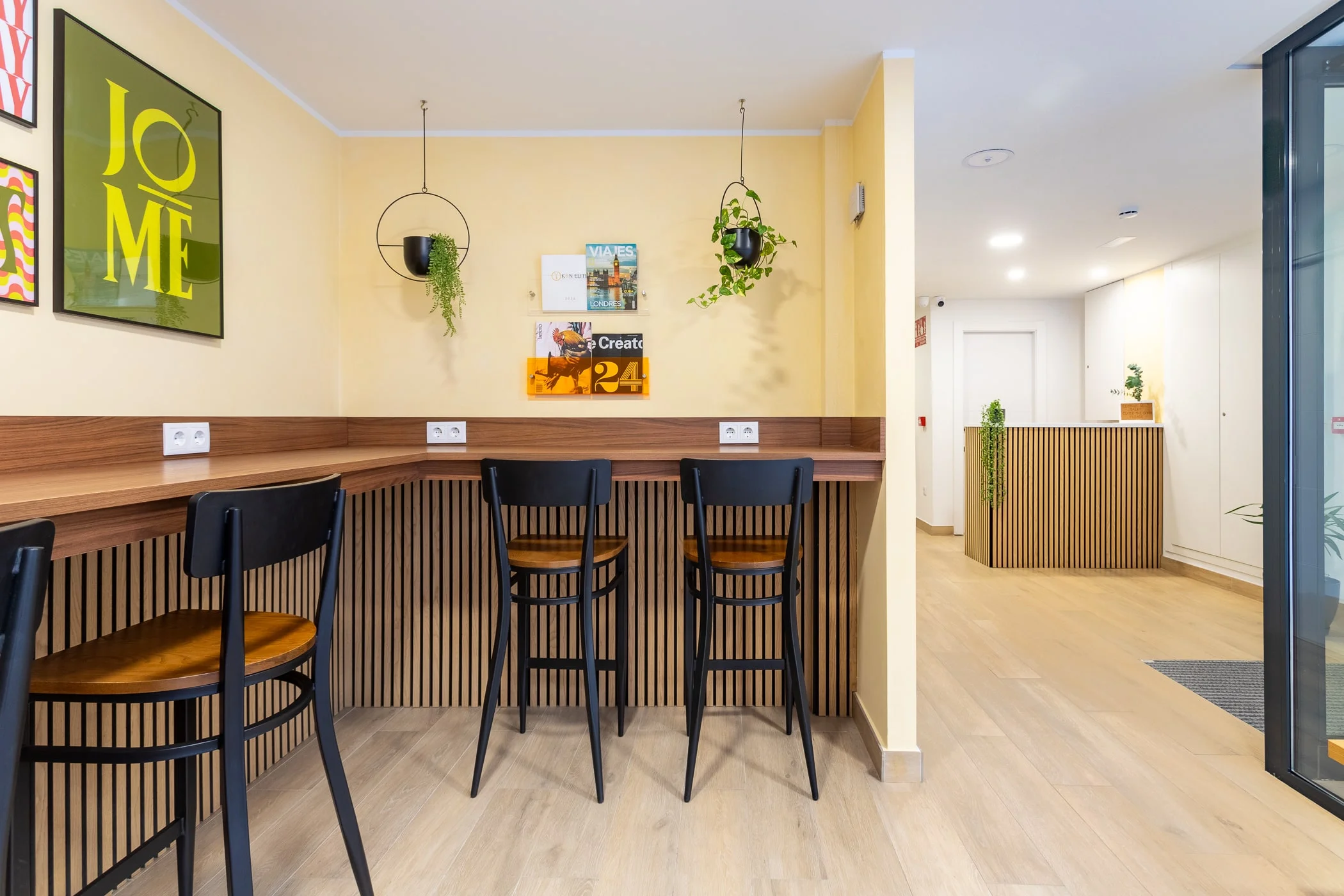
This is exactly what we have tuned in our own places: Jome Stays Alicante Centro and Jome Stays La Nucía are 35 m² apartments for up to four people, with a full kitchen, high-speed wifi, air conditioning and heating, smart TV and complimentary coffee. They are thirty-five square metres precisely because twenty gets small when you also work in there.
Cafe, coworking or working from your apartment?
All three have their moment, and the sensible approach is to mix them by type of day.
From your apartment when you have back-to-back calls or work that needs long concentration. It is the cheapest option and the only one where you control the background noise. It requires the place to be properly set up, which is what the section above is about.
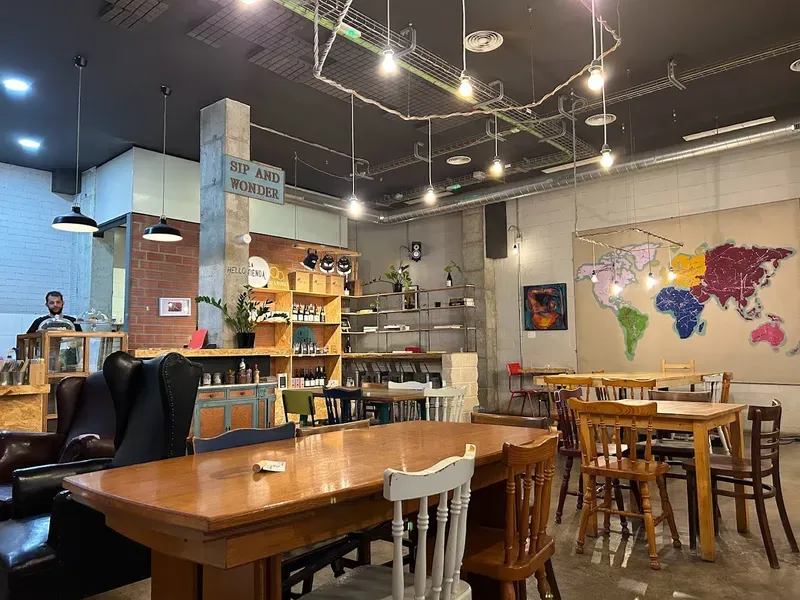
In a cafe for lighter mornings, to break the routine, and to avoid going five days without speaking to anyone. Alicante has a reasonably good speciality coffee scene and several places that genuinely welcome laptop workers. We list them with locations in the cafes and coworking guide. Two unwritten rules: order in proportion to how long you occupy the table, and never take video calls on speaker.
In a coworking space if you are staying more than a month, need a meeting room, or want to meet people. The city has several options with daily, weekly and monthly passes, and the jump from a day pass to a monthly one usually pays for itself quickly.
Paperwork, cost of living and realistic expectations
Two things worth clarifying before you come.
The paperwork depends on your passport. If you are an EU citizen, there is nothing to arrange for a remote-work stay. If you are coming from outside, Spain has had a specific visa for international teleworkers since 2023, with minimum income requirements, health insurance and an employment relationship with companies outside Spain. The exact conditions and thresholds get updated, so check them at the official source or with an immigration adviser before planning the trip — do not rely on what a blog says, this one included.
The cost of living is moderate, not cheap. Alicante remains clearly below Madrid or Barcelona, and well below most northern European capitals. But accommodation prices have risen with demand, and in high season the gap narrows. The realistic way to frame it: the same budget buys you more space, more light and more sun than a big city would — not necessarily a much smaller bill.
Conclusion
Alicante suits a particular profile especially well: someone working remotely for a company elsewhere, who values being able to go outside in January and prefers a manageable city to a metropolis. If you also travel frequently, the airport ends up being the deciding argument.
What determines whether the stay goes well is not the city but the place you work from. Desk, chair, light, upload speed and enough space that work does not take over the rest of the day. If you are looking at dates, you can check availability and details for Alicante Centro and La Nucía — and if you want to explore, here is what to see in La Nucía and a day trip to Tabarca island for the weekends.